
A client who is interested in your listing does one of two things next. They write to you, or they open your profile first.
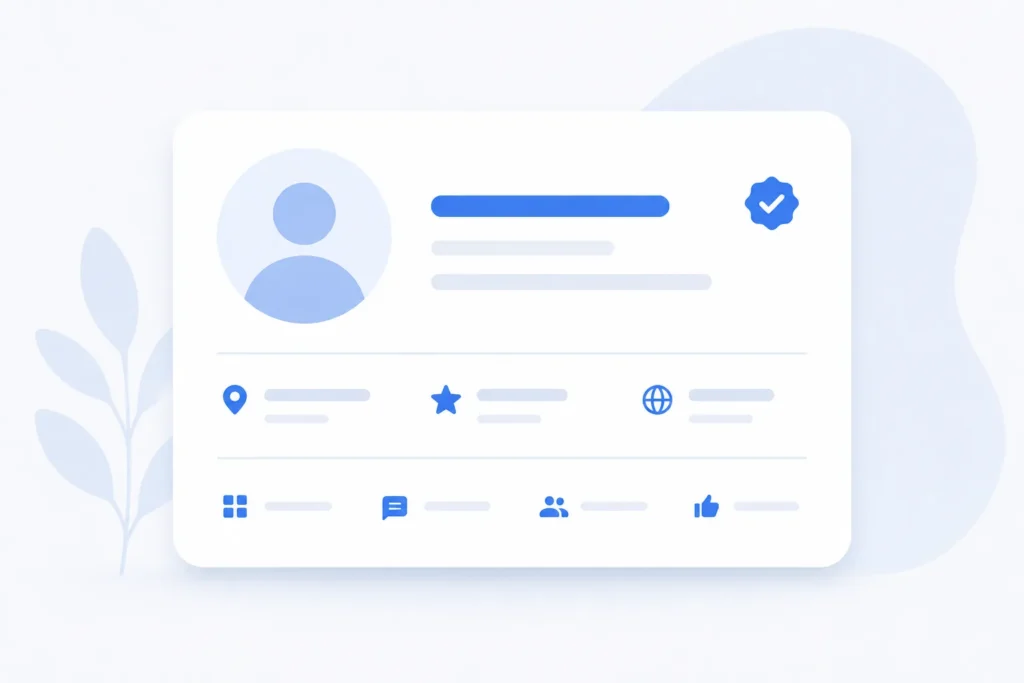
The second is more common than most freelancers expect, and it is where the decision usually happens. The listing describes a service. The profile answers a quieter question: is this a person I want to hand my money and my deadline to?
Here is how to make that answer easy.
Use a photo of your face
This is the single change with the biggest effect, and it costs nothing.
A profile with a real face reads as a person who is willing to be identified. An empty avatar or a stock logo reads as an account. You do not need a studio portrait: good daylight, a plain background, and looking at the camera is enough.
If your work is physical, a photo of you at work is even better, as long as your face is visible.
Write a headline that says what you do, not what you are called
The headline is one line, and it sits directly under your name. Most people waste it on a job title.
Compare:
- Designer
- I make logos and brand identities for small businesses
The second tells a client in one glance whether they are in the right place. Include who you work for when it narrows things usefully: small businesses, private clients, restaurants, online shops.
Let the description answer three questions
A profile description does not need to be long. It needs to answer what a hesitant client is actually wondering:
- What exactly do you do? The two or three services you genuinely offer, not everything you could theoretically take on.
- Who have you done it for? The kind of client, not necessarily names. “I mostly work with small businesses and private clients” tells them a lot.
- How do you work? How you prefer to start, how quickly you reply, whether you work remotely or on site.
Three short paragraphs is plenty. Write it the way you would explain your work to someone at a family dinner, not the way a company writes an “about us” page.
Fill in the small fields, because they are filters
The short fields look like formalities. To a client, they are the checks that rule you in or out:
- City. For anything done in person, this is the first thing they look for. If you work remotely across the country, say so in the description as well.
- Skills. Be specific. “Adobe Illustrator” is checkable, “creativity” is not.
- Languages. More useful than people think, especially for clients working with documents or with foreign partners.
- Links to your website and social profiles. A profile that leads somewhere real is harder to fake, and it lets a client look at your work without asking.
An empty field is not neutral. It reads as an unfinished profile.
Show the work, in the listings and on the profile
Photographs of finished work do more for trust than any wording. Every listing you publish appears on your profile, so your listings are, in effect, your portfolio.
That has a consequence worth planning for: a profile with one abandoned listing from six months ago tells a story you probably do not intend. Keeping two or three current, well-photographed listings does more than adding another sentence about your qualities.
Some of your profile is written by your behaviour
A few things on your profile you do not fill in. They accumulate:
- how long you have been a member
- how many published listings you have
- the reviews clients leave you
- the people who follow you
None of these can be rushed, which is exactly why clients trust them. The practical conclusion is simple: ask satisfied clients to leave a review, because early on the difference between a profile with two reviews and one with none is much larger than the difference between ten and twelve.
Do not inflate it
There is a temptation, early on, to list every skill you have ever touched and every service you could conceivably deliver.
It backfires in a specific way. A broad profile brings enquiries that do not match what you are good at, and you spend your time declining them or, worse, accepting them and struggling. A narrower, honest profile brings fewer messages and a much higher share of work you want.
The same applies to the verified badge and to anything else that must be earned. Everything on your profile should be something you would be comfortable being asked about.
A checklist
- Is there a photo, and is your face in it?
- Does the headline say what you do, not what you are called?
- Does the description answer what, for whom, and how you work?
- Are the city, skills and languages filled in?
- Do your current listings show real photographs of your work?
- Is there anything you would be uncomfortable being asked about?
If your profile passes that, it is doing its job: a stranger can read it in thirty seconds and feel comfortable pressing Message.